Addiction recovery is a deeply personal journey, one that benefits from multiple approaches to healing. While traditional addiction treatment programs often focus on talk therapy, behavioral strategies, and medical support, art therapy activities for addiction recovery offer a creative, nonverbal way to explore emotions, process trauma, and develop healthy coping mechanisms.
At MPower Wellness of Exton, we understand that recovery is not one-size-fits-all. Art therapy for addiction is an evidence-based approach, recognized by the American Art Therapy Association, that supports the mind, body, and spirit through the creative process. Whether you’re picking up a paintbrush for the first time or revisiting a forgotten hobby, creating art in a safe, supportive space can be a powerful tool for growth.
What Is Art Therapy?
Art therapy is a form of expressive therapy that combines art making with therapeutic guidance. In professional art therapy sessions, a licensed art therapist helps individuals use art materials, like paint, clay, collage, or drawing, to express emotions, explore self-awareness, and work through complex emotions related to substance use disorder and mental health challenges.
Unlike traditional art classes, the focus isn’t on the finished product but on the process of self-expression, emotional healing, and self-discovery. For those in addiction recovery, art therapy offers a unique path to stress reduction, emotional resilience, and personal growth.
The Evidence Behind Art Therapy for Addiction Recovery
Art therapy isn’t just about creating art; it’s an evidence-based approach that has been shown to support self-awareness, emotional healing, and long-term recovery. According to the American Art Therapy Association, art therapy aids individuals in expressing emotions that may be difficult to put into words, making it especially valuable in addiction recovery and mental health care.
Research also supports the role of art making in building resilience and improving self-esteem. The Substance Abuse and Mental Health Services Administration (SAMHSA) highlights expressive therapies like art therapy as effective ways to improve treatment engagement and overall outcomes in recovery. Studies show that art therapy sessions can reduce anxiety, improve mood, and enhance communication skills; all of which are essential for people navigating substance use challenges.
At MPower Wellness, we integrate art therapy into our treatment plans because it bridges clinical care with creative exploration. Whether through individual art therapy sessions or group therapy activities, we’ve seen how the simple act of art making can unlock new levels of self-awareness and provide a safe pathway to emotional growth in addiction recovery.
The Benefits of Art Therapy Sessions in Addiction Treatment
Some of the benefits of art therapy for addiction treatment can include:
- Provide a safe space to process traumatic experiences and reveal hidden aspects of yourself.
- Support emotional expression when words are difficult.
- Aid in stress management and reduce anxiety during the recovery process.
- Foster a positive self-image and positive self-identity.
- Encourage self-reflection and personal insight.
- Enhance social skills when practiced in a group therapy or family therapy setting.
- Act as a valuable tool in conjunction with cognitive behavioral therapy (CBT) and other therapeutic modalities.
Integrating creative, holistic approaches like art therapy into addiction treatment programs can improve engagement and long-term outcomes.
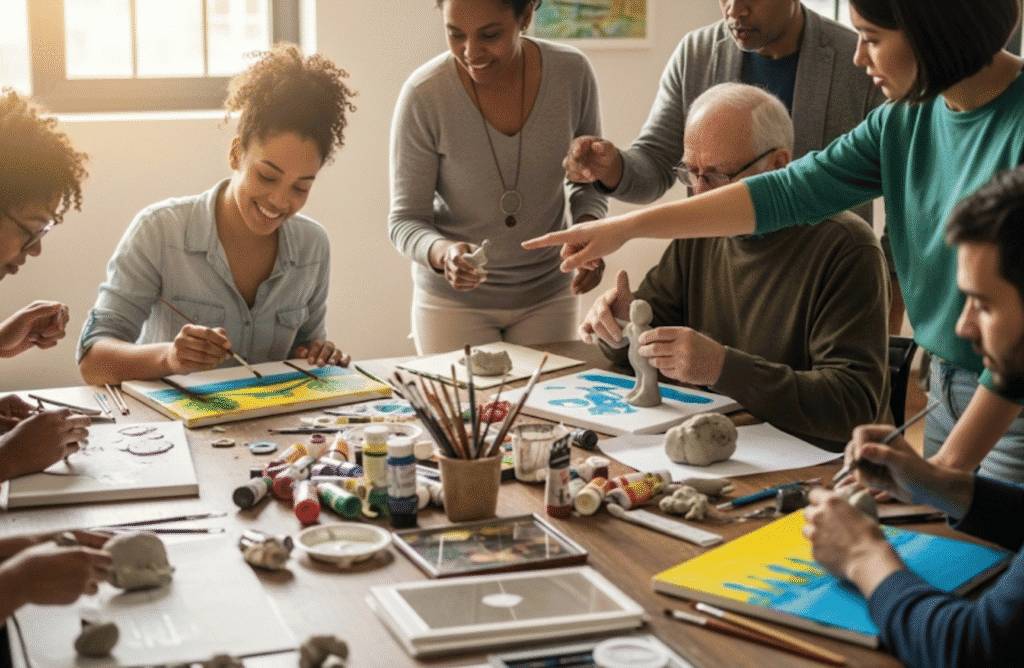
Art Therapy Techniques for Addiction Recovery
Incorporating art therapy into addiction treatment gives clients a creative, supportive way to process emotions, strengthen coping skills, and build confidence throughout the recovery process.
Instead of focusing on artistic ability, these techniques emphasize the creative process as a pathway to healing. Art therapy plays an important role in helping clients with substance use disorder reduce stress, improve mental health, and reconnect with themselves in meaningful ways.
Some effective art therapy techniques include:
Self-Portraits
Creating art in the form of a self-portrait allows clients to explore self-awareness, confront negative emotions, and work toward a stronger sense of identity. This technique often boosts self-esteem by helping clients see themselves through a more compassionate lens.
Abstract Art for Emotional Expression
Abstract art offers freedom from rules and structure, encouraging emotional release and processing of hidden trauma. This nonverbal outlet can be especially helpful when words aren’t enough to capture difficult experiences tied to substance abuse.
Marking Significant Events
Art projects that honor milestones, such as 30, 60, or 90 days sober, reinforce progress in the recovery journey. These visual markers celebrate growth, encourage reflection, and serve as reminders of strength during challenging times.
Group Collages
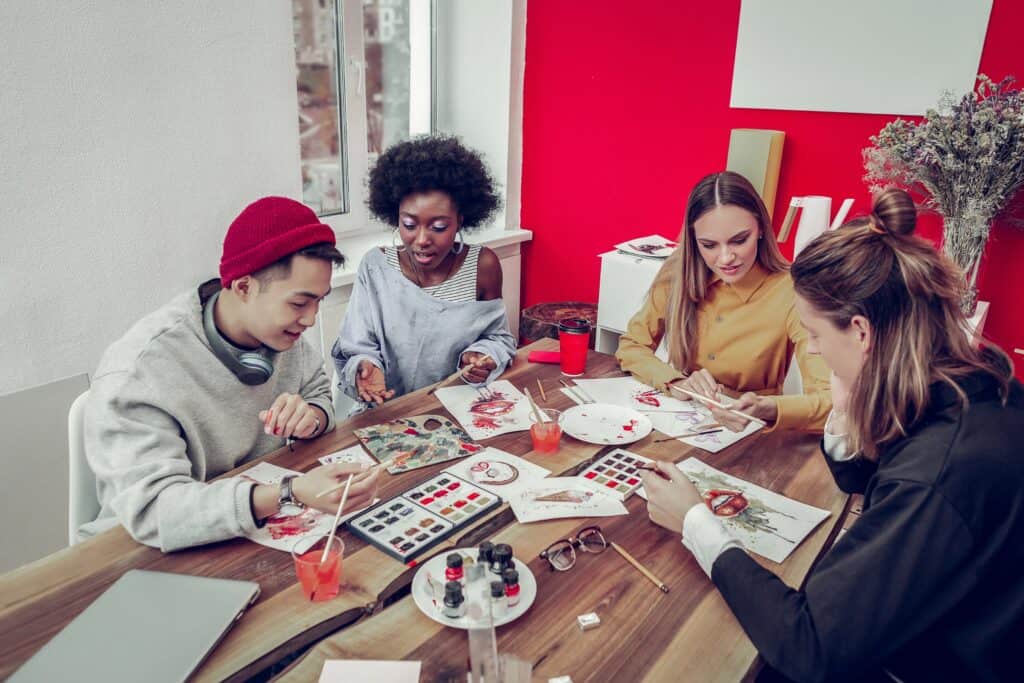
In a group therapy setting, participants work together on a shared project, enhancing social skills, building connection, and creating a sense of belonging. Collaboration not only fosters community but also provides a safe space for enhancing self-awareness in relation to others.
Visual Representations of Coping Strategies
By illustrating personal coping tools, clients strengthen their ability to remember and use them in daily life. This technique incorporates both creativity and practicality, making art therapy prompts a valuable tool in building resilience against relapse.
Ultimately, incorporating art therapy into substance abuse treatment helps clients gain a deeper understanding of themselves, their struggles, and their strengths. These practices complement traditional therapies, offering a holistic path toward healing and long-term recovery.
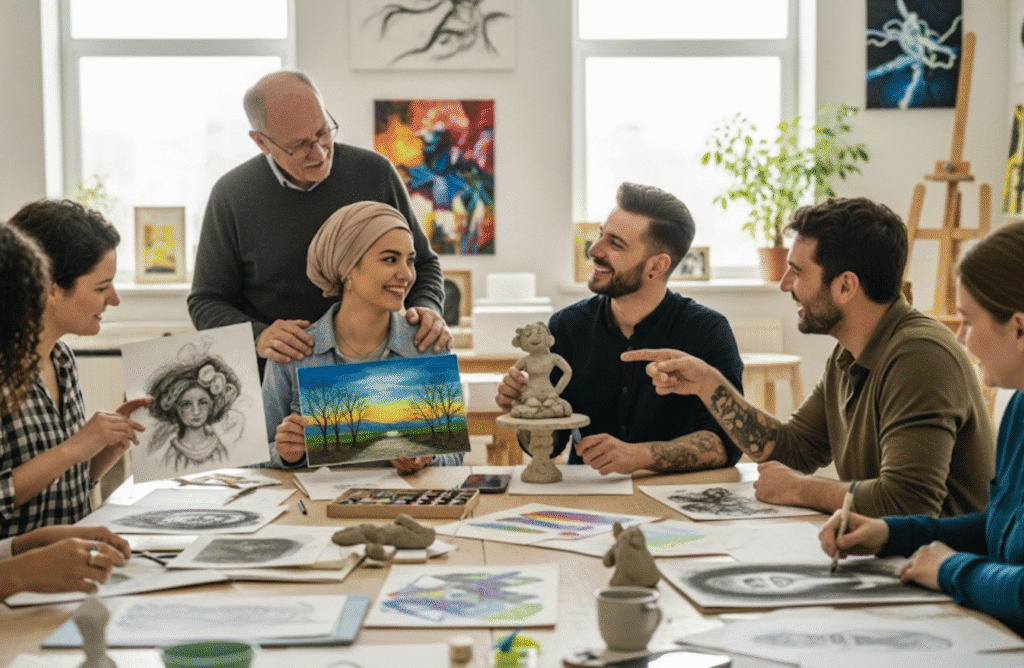
Combining Art Projects with Other Therapeutic Modalities
Integrating art therapy into addiction treatment works best when combined with traditional therapies like cognitive behavioral therapy, family therapy, and group therapy. By incorporating art therapy into the recovery journey, clients benefit from both structured talk-based methods and the freedom of creative expression.
For example, after a CBT session exploring thought patterns, an art therapist might guide you in art projects that visually represent healthy coping strategies. This combination bridges intellectual understanding with emotional integration.
Why Art Therapy Plays a Key Role in Addiction Treatment Programs
Art therapy aids in breaking down barriers to communication, helping clients process traumatic experiences and express emotions that may have been buried during substance abuse. Through art therapy sessions, clients build emotional resilience, reduce anxiety, and experience the benefits of art therapy in tangible ways; from improved mood to greater self-esteem and a positive self-image.
Whether you’re engaging in abstract art, self-portraits, or group art activities, the act of art making fosters a supportive environment for personal growth, self-reflection, and lasting recovery.

A Holistic Approach to Healing at MPower Wellness
At MPower Wellness of Exton, art therapy is just one part of a wider spectrum of expressive and holistic therapies designed to support clients in every stage of their recovery journey. Addiction recovery isn’t just about addressing substance use disorder; it’s about creating a safe space for emotional expression, self-discovery, and stress management while treating the underlying mental health problems that often contribute to addiction.
That’s why, alongside traditional therapies like cognitive behavioral therapy and group counseling, MPower clients benefit from a full spectrum of complementary therapies that address the mind, body, and spirit:
- Music Therapy: Utilizing rhythm and sound as tools for healing, music therapy enables individuals to release emotions, foster connections with peers, and alleviate stress in a safe and supportive environment.
- Yoga Therapy: Through mindful movement and intentional breathwork, yoga therapy supports physical and emotional release. It also promotes relaxation, eases tension, and builds a stronger mind-body connection that aids and encourages resilience throughout the recovery journey.
- Mindfulness Practices: Grounded in awareness and presence, mindfulness supports clients in managing anxiety, calming intrusive thoughts, and building resilience against relapse triggers. Over time, these practices strengthen coping skills and reduce vulnerability to relapse triggers.
- Expressive Arts: Whether through painting, sculpture, or other forms of creative expression, expressive arts activities help clients process trauma, increase self-awareness, and foster a positive sense of self along the recovery journey. The focus is less on artistic skill and more on discovery, healing, and self-empowerment.
By integrating these expressive therapies with evidence-based treatment, MPower Wellness creates a comprehensive approach to recovery. Clients not only learn new ways to cope with stress and cravings but also discover creative outlets for emotional expression, helping them build confidence, strengthen resilience, and lay the foundation for long-term healing.
Start Your Creative Healing Journey at MPower Wellness of Exton
At MPower Wellness of Exton, our addiction treatment programs are designed to meet the whole person; mind, body, and spirit. Art therapy is one of the many expressive therapies we offer to help clients develop healthy coping mechanisms, process complex emotions, and build a life of purpose beyond substance abuse.
Every stroke of the brush, every choice of color, is a step toward healing. With guidance from a professional art therapist, you can uncover hidden emotions, build emotional resilience, and find joy in the creative process.
Ready to take the next step in your recovery journey? Contact MPower Wellness of Exton today to learn how incorporating art therapy into your addiction treatment can help you heal, grow, and thrive.
Sources
Bitonte, R. A., & De Santo, M. (2014). Art therapy: An underutilized, yet effective tool. Mental Illness, 6(1), 5354. https://doi.org/10.4081/mi.2014.5354
Shukla, A., Choudhari, S. G., Gaidhane, A. M., & Quazi Syed, Z. (2022). Role of art therapy in the promotion of mental health: A critical review. Cureus, 14(8), e28026. https://doi.org/10.7759/cureus.28026
Substance Abuse and Mental Health Services Administration. (2024). The 2024 Gallery of Hope: Artistic expressions of recovery across the nation. https://www.samhsa.gov/resource-search/ebp/2024-gallery-hope